What's an ETF? Your Guide to Exchange-Traded Funds
May 6, 2026
Investing
Have you ever thought buying individual stocks sounds too risky?
Like, how do you even pick which company to invest in? What if they crash? Ever heard of Blockbuster?
You're not alone. That's where ETFs can be useful, and they are simpler than you think.
What is an ETF?
ETF stands for Exchange-Traded Fund, and it's a collection of hundreds or thousands of stocks and bonds that are bundled together in a single fund that trades on stock exchanges. With an ETF, instead of picking individual companies, you're buying a fraction of each company in the fund at once.
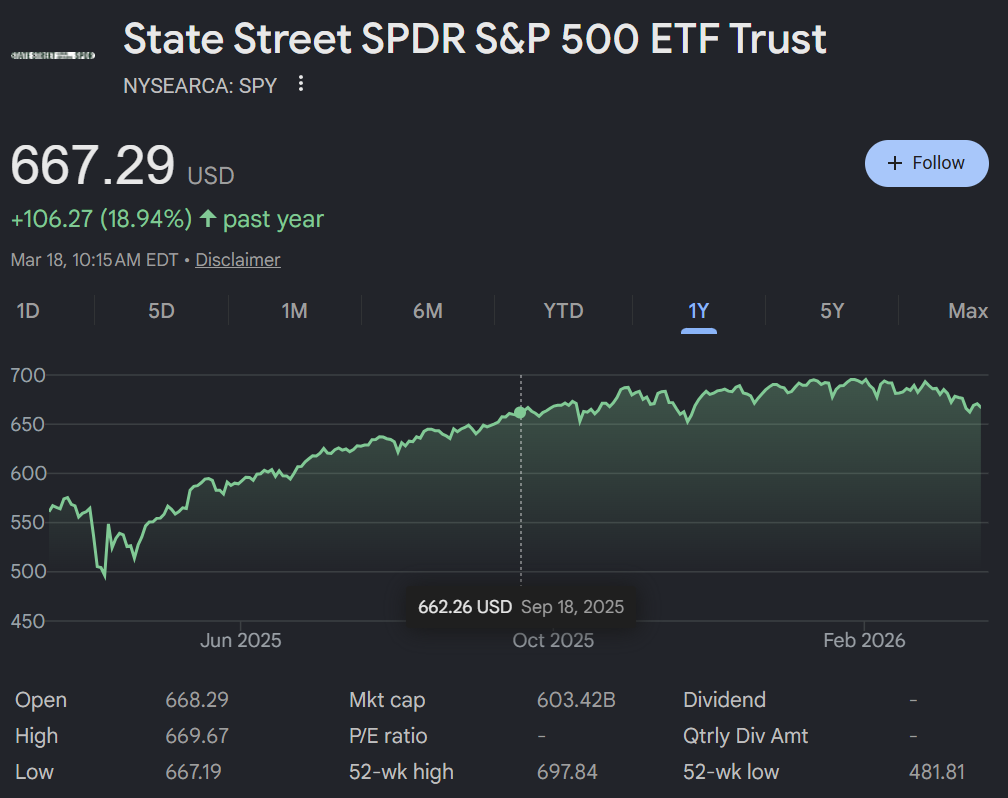
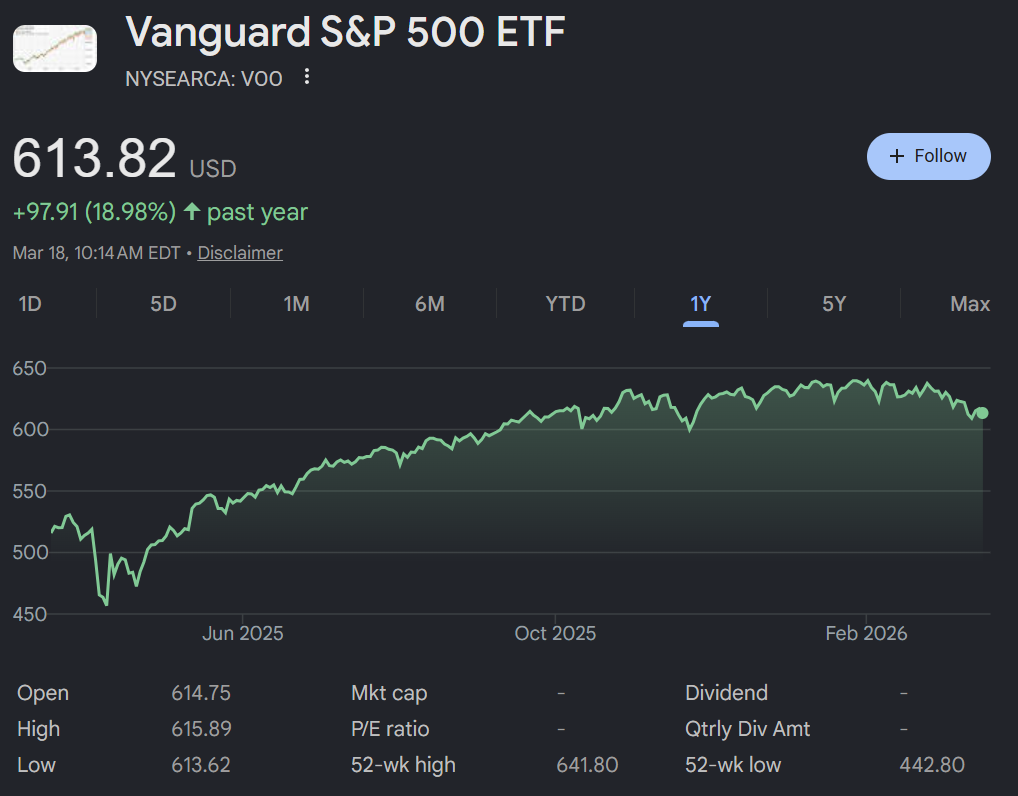
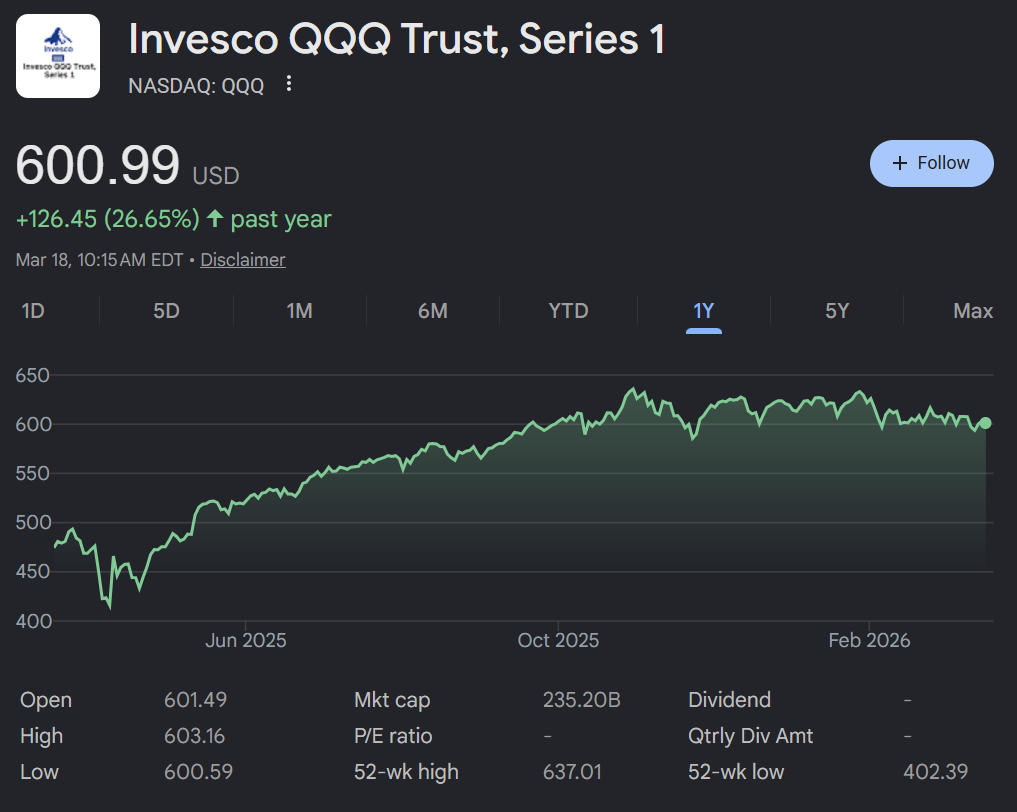
That's what makes ETFs different from picking stocks yourself. When you buy one share of an ETF, you gain exposure to all the companies inside that fund. That way, you don't have to buy multiple shares in other companies to diversify your portfolio. Traditional ETFs include SPY and VOO, which track the S&P 500. Another big one is QQQ, which focuses heavily on technology companies.
Here are the performances of these three ETFs over the past year:
How Do ETFs Work?
Unlike mutual funds that only trade once per day at market close, ETFs move exactly like stocks. You can buy and sell them whenever the market is open, and their prices change in real time.
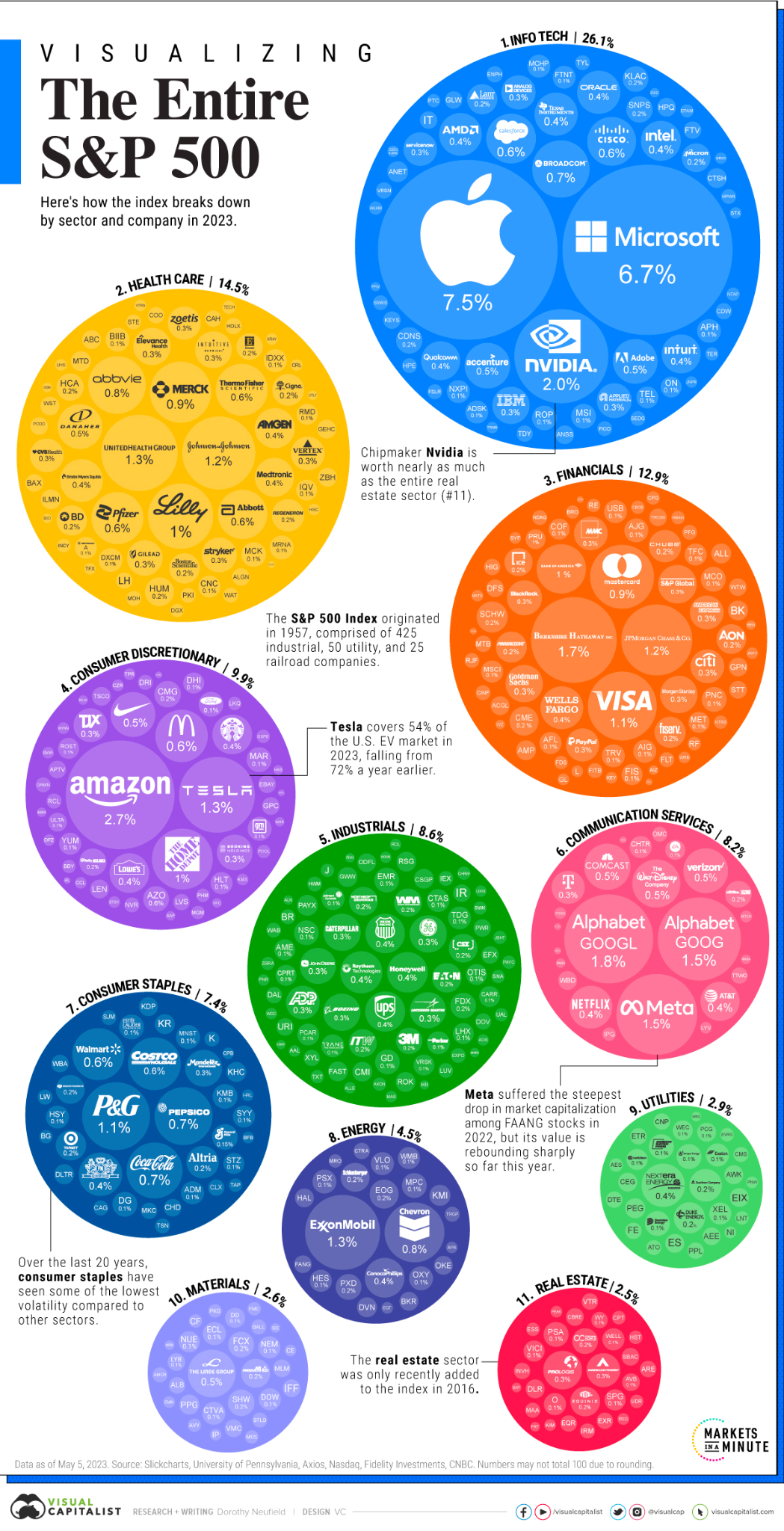
ETFs are not split equally among all companies, they are typically divided by market cap, basically the size of the company. So while there might be 500 companies in the S&P 500, if you invested $500, you aren't buying $1 of each company. You're actually buying $36.50 of NVDA, $30.55 of Apple, and $12.35 of Tesla. Interestingly enough, there are about 20 companies in the S&P 500 that each account for only 0.01% of the index. So, for one of those companies, you'd only be purchasing $0.05 of that stock when you buy $500 worth of the S&P.
Tax Efficiency
ETFs are also generally more tax-efficient than mutual funds. With mutual funds, you might have to pay capital gains taxes even if you don't sell anything, just because other investors sold their shares. On the other hand, ETFs are structured differently, so you typically only owe taxes when you actually sell your own shares.
Important note: This tax effect only matters in regular brokerage accounts. If you're investing through tax-advantaged accounts like a Roth IRA or 401(k), you don't need to worry about capital gains taxes anyway.
Final Thoughts
ETFs offer an easy way to diversify your investments without needing to research and buy dozens of individual stocks. They're cheaper than most mutual funds, more flexible, and more tax-efficient. Whether you're just starting out or looking to change your portfolio, ETFs are worth looking into.
Written by Matthew Park, LRF Intern & Contributor
Similar Posts about Investing

What Even Is The S&P500?
You hear it all the time, 'The market is up…the market is down…the mar...
How to Invest My Money: A Guide for College Student-Athletes
If you're a student-athlete wondering how to invest your money, you're...

15 Common Investing Terms Every Student-Athlete Needs to Know
Learning the language of investing is just like learning all the plays...

AI in Investing
About 20% of Gen Z investors now use generative AI for every investmen...
Your Guide to Mutual Funds
Mutual funds, ETFs, index funds — they all sound similar, but the diff...